The biggest stories in technology these days tend to be about smartphones. Even with smartwatches threatening to take over as the most talked about, highly anticipated hardware releases going, the not-so-humble smartphone still manages to truly capture the imagination like few other new releases.
When Apple first introduced folders in iOS way back with the iOS 4 release, it was largely laughed at by Android fans for being flimsy and barely functional. They had good reason to do that, too; Android has had a much functional, not to mention useful, folder organization system since time immemorial, whereas iOS' initial attempts were lousy and half-baked at best. In fact, there were so many lacking bits and pieces, and glitches, that one of them ended up serving a purpose that wasn't originally intended; the ability to nest folders within folders. It appears that the same glitch has carried over all the way to iOS 8 as well, and using the same technique (which we'll describe going forward for the uninitiated), you can nest folders within folders even in iOS 8 and iOS 8.0.2.
Apple has just released bash updates for OS X 10.9 Mavericks, OS X 10.8 Mountain Lion and OS X 10.7 Lion. These can be downloaded and installed by all users concerned by the well-documented Shellshock vulnerability, which has caused quite the stir over the past few days. We've all of the details, along with those all-important download links, right here.
Apple's iOS 8 seemed to be experiencing a smooth initial transition, with millions of users downloading on the very first day of its launch and bugs apparently as minor as they were few. But after the mess that Apple made with iOS 8.0.1, things seem to have gone downhill somewhat, and it now appears that iOS 8's 'Reset All Settings' feature is also removing iCloud Drive documents apparently safe in Apple's secure online storage hub.
Ordinarily, Apple releases a major enhancement to its mobile software in September, with a further, '.1' update arriving early on in the following year. However, iOS 8's schedule of updates will see the Cupertino pushing out the changes much more aggressively, with three major new releases set to arrive before iOS 9. Not only has iOS 8 brought so much to the table already, but there's still a great deal to come, and so along with the customary iOS 8.1 update, expect to see iOS 8.2 and a further iOS 8.3 as Apple seeks to roll out and establish the likes of Health / HomeKit, CarPlay, Apple Pay and several other potential game-changers.
Some ten days after the official roll-out of the iPhone 6 and iPhone 6 Plus, the official Facebook Messenger app has just been updated in compliance with both new handsets. The changelog doesn't list anything else by way of changes, but given that app developers often squeeze in a couple of gratuitous bug fixes and performance enhancements without explicitly mentioning them, this is an update recommended for all using Facebook Messenger for iOS.
Microsoft's next version of Windows has been casually referred to as "Windows 9", which makes a great deal of sense given that the current Windows 8.x was preceded by Windows 7. But while it's still a distinct possibility that the software giant will retain the numbered system, the company has also tried to ramp up hype of the impending Windows Technical Preview by keeping enthusiasts guessing as to what name the next major build will take, and with an official moniker expected to be officially revealed soon, a site set up specifically for the Tech. Preview appears to have slipped "Windows TH".
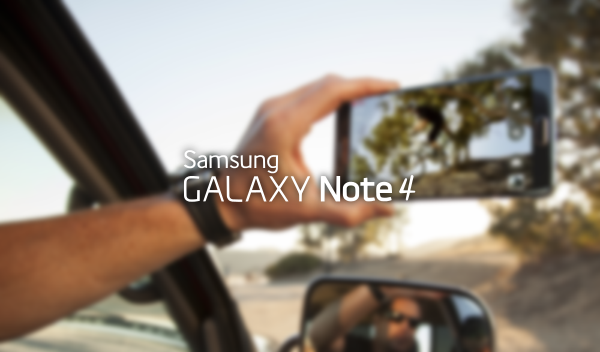
The roll out of the Galaxy Note 4 has been brought forward by Samsung in a somewhat hurried attempt to compete with the unforeseen popularity of Apple's two new iPhones, but in its haste, the Korean outfit may have released some units with a quite significant design issue. As the Tizen maker's Cupertino rival looks to recover from the Bendgate issue, it has emerged that some Note 4 users have discovered quite a large gap between the display and the outer frame - sizeable enough to fit a business card or a couple of sheets of paper - and given the asking price of the latest installment to the iconic phablet series, it's not exactly the kind of build quality that said users would've expected.
iOS 8 has brought a considerable amount to the table in terms of features, many of which are specific to the iPhone 6 and iPhone 6 Plus. With larger displays, there's definitely something of a learning curve involved for those long-time iPhone users accustomed to much less real estate, and so to make it easier for smaller fingers and thumbs to reach all of the UI elements, Apple introduced a neat feature called Reachability. As suggested by the name, the implementation enables iOS 8 users on iPhone 6 or 6 Plus to reach the upper tiers of the interface with two light taps of the Touch ID fingerprint sensor, which pushes the entire UI downwards, and although your iOS 7-running device mightn't necessitate such a feature, the jailbreak community has nonetheless obliged.
The Web is awash with animated GIFs, and thanks to the introduction of iOS 8 and its third-party keyboard support, the authors of such apps have sought to make it easier than ever before to share these moving images. But the GIF isn't the only file type supportive of animation, and although the Animated Portable Network Graphic, or APNG, was assumed to be dying out, Safari for iOS 8 actually supports APNGs as standard. What's more, those using a beta or Developer Preview of OS X 10.10 Yosemite will also be able to indulge, and although both of Apple's new pieces of software have been inundated with new features, this is one that we certainly did not foresee.