Microsoft looks set to take the wraps off the Windows 9 Technical Preview very soon, and having already seen scattered leaks of the new operating system in screenshots, we now have what appears to be the clearest look yet at what the software maker has in store. A new batch of screen grabs, which do include another peek at the eagerly awaited return of the traditional Start menu, can be seen below, and while Microsoft is still very much pressing ahead with its motion to blend desktop interface with the contemporary touch-based environment, it's also abundantly clear that Windows 9 will be at least a partial reversion to type.
The so-called 'Tech Preview' of Microsoft's Windows 9 has been tentatively slated for launch the end of this month, and although the software giant is not yet dead-set on a date, some details are beginning to emerge as to what said release might entail. Like Apple, Microsoft's mobile and desktop features are constantly crossing over, and having introduced a new Notification Center with Windows Phone 8.1, the forthcoming Windows 9 for desktop and tablet will likely enjoy a similar implementation. According to a new report, we could see the Notification Center of Windows 9 as part of the Tech Preview, something which we’ve heard about before, and while it won't be finished, it'll give us a flavor as to what's in store for the eventual Windows 9 launch.
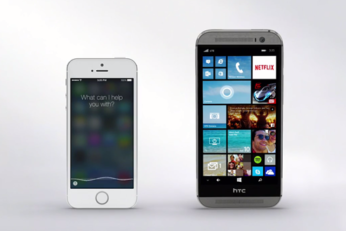
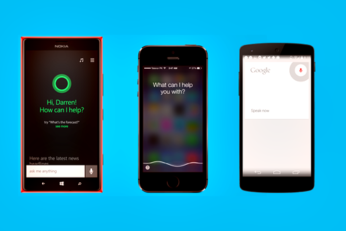
For some reason, the tech world spends more time parodying voice assistants than actually using them, and just like when Siri and Google Now first arrived, we got a little excited about Microsoft's Cortana earlier on this year at BUILD. Certainly, the software giant is every enthusiastic about the software, which is based on the virtual voice of the character from Halo, and with the HTC One M8 confirmed as releasing on Windows Phone, Microsoft has taken the opportunity to take a swipe at Apple and Siri once more.
Microsoft has had a lot of learning opportunity from the successes and failures of Windows 8, and that was evident from some of the quick fixes that were introduced with Window 8.1, which was a mere incremental update over the existing operating system. Still, for those who had hue and cry over the stark difference that Windows 8 presented over Windows 7, Windows 8.1 at least made the system usable for them once again. However, any major changes that were expected from the Redmond company, won’t happen until Windows 9 (or Windows Threshold, as it is called right now).
While fragmentation is one of the biggest issues plaguing the Android ecosystem, it has also been one of the most beneficial aspects of the operating system, since it has allowed a number of OEMs to have their own builds of Android onto numerous smartphones, resulting in Google’s mobile OS becoming the largest market share holder in terms of usage. While OEM builds are the more popular ones out there, there are branches like CyanogenMod as well that have, over the years, built up a devoted fan base and massive developer community that continues to contribute to Cyanogen’s growth and development. And now, things might be headed in an even better direction for CM, as the team behind Cyanogen Inc. has met with Microsoft’s CEO, Satya Nadella.
In the modern Digital Age, the primary IM services are WhatsApp, Kik Messenger, iMessage alongside a myriad of others boasting millions of users. But not so long ago, Microsoft's MSN Messenger was the dominant force, but after the Windows maker acquired Skype for the tidy sum of $8.5 billion, things seemed to wane. Now, after 15 long years - the last few of which have been in relative obscurity - the software maker has finally decided to kill off MSN Messenger for good, which means users in China - which is the last place where Messenger lives - will have to say goodbye to Microsoft’s famed messaging service for good.
Microsoft made a brave, if not reckless call in the run-up to the release of the Xbox One, and in honesty, the decision to bundle the Kinect peripheral in as a standard feature was just one of many suspect choices that might have contributed to Sony's early lead with the PlayStation 4. The fact that Xbox One owners got a motion-sensing camera that they didn't necessarily want was not the main issue, but rather the price - at $100 more than the PS4 - made the normally arduous decision for fence-sitters just that little bit easier. After stringing it out for a few months, the software giant finally caved in and offered the Xbox One sans Kinect for a price comparable to that of its major competitor, and as of October 7th, those who'd retrospectively like to buy the popular accessory will be able to.
Microsoft's Windows 9, otherwise currently known as 'Threshold', will be released to developers as a 'technology' preview in the coming months, but as we eagerly await the next major build of the iconic operating system, new and previously undisclosed details are beginning to emerge.
The concept of personal assistants has been around for a long, long time, and they indeed make one’s job a lot easier by sharing a hefty amount of your workload, maintaining schedules, prioritizing stuff, keeping track of projects and whatnot. With advancements in technology, a lot of that responsibility has shifted to our smartphones, further supported by the fact that not everyone can afford (or is entitled to) a personal assistant. Apple took the concept to the virtual world with its implementation of Siri, followed closely by Google Now and now, Microsoft’s Cortana for Windows Phone, with the latter being the highlight these days.
Google’s Chromecast saw a level of success that’s not easily achievable for any gadget. The device still holds a listing at the top of Amazon’s best seller in electronics, and rightly so - the low costing streaming dongle has a wonderful feature set to offer at a highly attractive price tag. There hasn’t been any direct competitor to the Chromecast yet, but it appears that Microsoft finally might be upping its game. The software company might be entering the arena with a similar device aimed at users of the Windows ecosystem, according to some recent FCC filings.