
Philips Hue, the connected lighting system that was initially introduced by back in October of 2012, is going through further expansion with the introduction of the new Hue Go option. Like the rest of the Hue range, the Hue Go will fall under the category of intelligent home automation, can be connected and controlled directly from your smartphone, but differs from the rest of the established range as it is a truly portable lighting option that can be removed from its base and transported around the home.
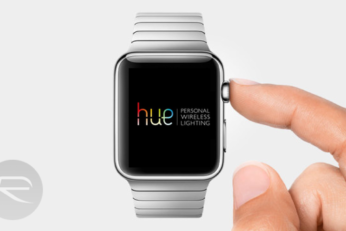
The Philips Hue bulb system has long offered iPhone and iPad owners the ability to control lighting colors and effects from the comfort of their devices, and with Apple Watch set to hit the market in little over one month, the company has confirmed that users will be able to manage Hue directly from the wearable.
Apple's HomeKit framework may be barely a couple of days old, but there are still plenty of developers around the world who are sat pondering what they could do with such a framework. Being able to tie all sorts of home automation into one app is an awesome idea, but HomeKit wasn't the only cool new addition to iOS at WWDC.
The Philips Hue range of smart bulbs is seen by many as a great gateway into the world of home automation. We really wouldn't argue against that, and with plenty of geeky types telling us at every turn that we should join the home automation revolution, it seems that turning our lights on and off using our smartphones or with the help of a schedule is something we really are going to have to get used to.
Tech evolves in many different ways, and although we tend to focus our attentions on the mobile industry, Philips has demonstrated that there is still room for interesting niche products with its Hue bulb collection. The beautiful, colorful glimmer emitted by the bulbs is glorious in itself, but by integrating with mobile devices for control of colors, dimness and other such settings, geeks far and wide have been sucked in by their glow. Philips may have been fairly unrivalled in this market hitherto, but the Lumen Bluetooth 4.0 LED bulb looks set to change all that. The company took its idea to the crowded world of tech start-ups, and is now set to hit a retail outlet near you. Details after the break.
The Philips Hue range of light bulbs has benefitted from a number of important improvements during its relatively short life span. The initial Starter Pack has been upgraded with the addition of the Bloom table lamp bulb as well as the gorgeous LED lighting strip option. Philips has also responded positively to eager developers by opening up their API to allow software engineers to create new and innovative apps that interact with the Hue range. After teasing even further changes back in October the company has stayed true to their word by introducing two new bulb types as well as a rather unique tie-in with the Disney Corporation.
Philips has already shown that they are a committed player in the smartphone controlled home automation world with their recent updates to the Hue mobile app for iOS and Android. The introduction of geofencing capabilities, synchronous light changing within scenes and notable improvements to alarm functionality shows that Philips think the Hue product is here to stay. However, if you need something more to be convinced, then the extension of the Philips Hue range with LightStrips and Bloom feature bulbs should do the job nicely.
Home automation has long been one of the things people point to when trying to explain what they think the future will look like. We'd have to put Google Glass in the same bracket - Glass is something that at the moment seems ahead of its time, but we can totally see it being the norm in another ten or twenty years, even if it doesn't take off all that quickly in the next two or three.
We have seen instances in the past of resourceful developers throwing together various pieces of work and technologies to create clever ways of controlling lighting levels at home or office as well as creating make-shift home automation systems that may not have the same power as a premium system, but still gets the job done. The SiriProxy-Hue project is yet another example of how community driven projects can interact with Apple's own software and hardware to create a usable system for the average user.
Now that's a title we didn't expect to be writing any time soon, but there it is, and unbelievably, it's accurate. Starting tomorrow, buyers will be able to walk into an Apple Store and walk out with a Philips light bulb. Not just any light bulb, though. This one's special. Very special indeed.
No More Content


