Apple's iOS device range is utilized by consumers mainly for the purpose of entertainment, productivity and communication. However, as the Cupertino company has regularly sought to demonstrate in promotional clips, the iPhone and and iPad offer great value when it comes to more significant fields such as education and medical, and early testing of a new iPhone app can apparently screen for skin cancer more accurately than a physician would be able to.
If you're an avid follower of mobile tech coverage, you'll have found that Apple's elusive iPhone 6 continues to command a fairly decent proportion of the blogosphere's column inches, which isn't bad going given that we're still over four months from the purported release. Based on a bunch of info an accompanying leaks, we've painted what we believe to be a fairly vivid picture of what Apple is preparing to release in Q3, and a new comparison of an iPhone 6 mock-up against pre-existing iOS devices offers an even better perspective.
In the very latest Apple vs. Samsung court battle, the latter was ordered to pay its rival damages to the sum of almost $120 million, but as one might perhaps have anticipated, the Korean company is having none of it. John Quinn, Samsung's lawyer in this particular case, has noted that the Galaxy maker will request that the award of damages be reduced to zero, which is a rather brazen step given the size of the initial award.
As we draw closer to the eventual unveiling of the next-generation iPhone, it appears that Apple isn't quite done yet with its currently available hardware. With WWDC 2014 just around the corner, it's widely accepted that Apple will make some interesting and extremely important announcements regarding iOS 8 and the progress that has been made on its first wearable device. However, Tim Cook and his team is remaining cautiously tight lipped about the next iPhone, which could have something to do with the fact that insiders are suggesting Apple is about to hold an ‘enormous’ iPhone upgrade event this week.
The jury has finally reached a verdict in the round two of Apple vs Samsung trial and has found Samsung to have infringed on two out of five patents of Apple. As a result, Samsung has been ordered to pay Apple around 120 million dollars ($119,625,000 to be exact) in damages, a far cry from $2.2 billion which Apple asked for.
Everybody likes to get something for free, and that is precisely how FreedomPop - a company offering data, call and text packages at no cost whatsoever - has managed to generate such a great amount of publicity over the last few months. Last year, it introduced the Android smartphone package that required a one-off $100 payment before offering the free monthly goodies, and now, those on iPhone can take advantage.
At the Worldwide Developers Conference in June, Apple is expected to take the wraps off iOS 8, and in the last couple of months, we've been hearing all sorts of rumors with regards to what features and improvements will be added. A new concept, as well as a rather dubious leak, have almost simultaneously emerged in the wild, and with just over a month left until the grand unveiling, these new developments may offer even more of an insight into what the Cupertino has up its sleeve.
The iOS jailbreak malware, identified as Unflod.dylib or simply Unflod, looks to have originated from China. Here's how to find it on your iPhone or iPad, and then subsequently remove it.
Apple's Siri voice assistant has been gradually improved by Apple in its two-and-a-bit year lifespan, but it's fair to say that there's plenty of scope for further enhancements. At present, Siri is very one-dimensional, and can only perform tasks or actions based upon a limited field as predetermined by Apple. We expect this to change at some point in the future, but if you don't wish to wait for the Cupertino to broaden Siri's horizons, then you might be interested in GoogolPlex, the brainchild of four University of Pennsylvania students that does exactly that.
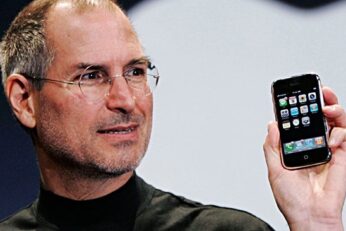
It's an accepted fact that Apple changed the face of the smartphone industry with the introduction of the iPhone back in 2007, and even though it has only been seven years, it feels as though we've always been tapping home screen icons and gesturing our way through interfaces. Not only did the iPhone completely turn the market on its head, but Google's in-development Android interface - which didn't, at the time of the Apple smartphone's announcement, support touch input - also had to be completely re-thought.