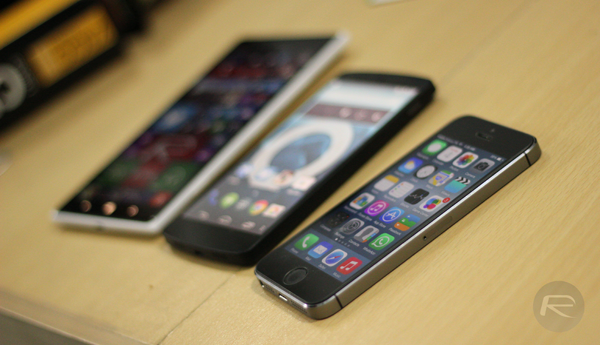
As mobile users, most of us follow the standard precautions in the ongoing fight against malicious software, but as the defenses become more adept to dealing with such intrusions, attackers also dream up more advanced, cunning ways of sneaking into our devices and extracting data. A new type of spyware, which appears to have originated from Hong Kong, is said to affect iOS users who've opted to jailbreak their devices, and according to experts on the matter, may also be connected to a similar piece of unwanted software lurking on Google's Android.
Apple has just released bash updates for OS X 10.9 Mavericks, OS X 10.8 Mountain Lion and OS X 10.7 Lion. These can be downloaded and installed by all users concerned by the well-documented Shellshock vulnerability, which has caused quite the stir over the past few days. We've all of the details, along with those all-important download links, right here.
By and large, jailbreaking is a relatively safe affair to perform, and as long as you abide by the precautionary steps that must be taken when opening areas of the ecosystem ordinarily shut off by Apple, you're generally safe. However, given that third parties can access root files, things can sometimes go horribly wrong, and with the jailbreak scene having been afflicted by two widespread incidents in the past five months, another piece of malicious software is said to be capable of stealing your Apple ID and password to buy apps without your consent.
Despite the stringent measures being put in place by software makers far and wide, large-scale security breaches remain a black cloud over modern technology, and today, a Russian Bitcoin site has leaked a total of 5 million Gmail addresses and passwords. Initially, it was suspected that the leaks were of passwords specific to the Gmail account in question, although now, it seems that the credentials have been snatched from external websites of users who signed up using a Google email.
Last week, numerous celebrities found themselves victims of a widespread hack, and although Apple stepped out with a statement to swiftly deny any wrongdoing, CEO Tim Cook did outline the company's intention to strengthen up security. As a number of users have already discovered, though, some of these improvements are already in place, with email notifications going out to users when a password change is or device restore is attempted, as well as when a login from a new device occurs.
The security of Apple's iCloud servers has had some considerable focus of late after a host of celebrities had their accounts raided and personal, intimate photos of them distributed online. After initially appearing to have been hacked, iCloud suffered quite the bloody nose over the incident.
In case you missed it, a number of high-profile celebrities had their very private images leaked onto the Web. But while it was rumored that Apple's iCloud infrastructure was to blame for the large-scale breach, the Cupertino giant has stepped out and denied that its services were to blame in an official statement on the matter.
Mobile security is very much in the news right now and for obvious reasons, with some celebrities having had some of their most compromising photos and video pop up online following an apparent iCloud security breach. Whether it is an actual security breach or simply the result of poor password choices, the incident has many considering the security of their data.
If you thought that your expensive Wi-Fi access point or router was secure, you may need to think again after a flaw was found in at least two of the chipsets used by hardware manufacturers.
Theft of personal, digital devices is fairly rampant, but thanks to the introduction of kill-switches, those snatching the gadgets of others are now often left with a bricked product that cannot be used or sold at will. It's not much consolation to the victim, but it has made a noticeable difference to smartphone theft in that the numbers have dropped off significantly. Now, a new law has been passed in California that means by 2015, any handset sold in the state will need to be kitted up with its very own kill-switch, and although most top-end devices now ship with such measures right out of the box, this new move will ensure that all new smartphones include something similar.