Starting next year, people who buy the right Samsung smart televisions will be able to play PlayStation games on them without having to actually own any PlayStation hardware beyond a controller. Sony chose Christmas week to announce the new partnership which sees Sony's games coming to a third-party's hardware lineup for the first time.
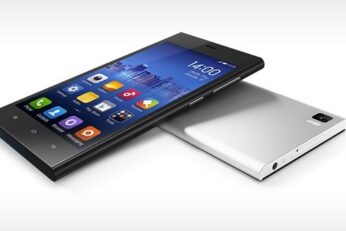
China is an economic superpower that continues to grow at an incredible rate, and consumer electronics firm Xiaomi perfectly encapsulates this climate. But while often dubbed the "Apple of China," it's not just its monumental rise to prominence that has resulted in this label, but also the notion that it copies many of the Cupertino's designs with many of its own products. In news that will certainly irk the Mac maker, Xiaomi's chief has set his sights on overtaking Apple and Korean competitor Samsung to become the dominant force of the smartphone industry in the next 5-10 years, and while the Chinese firm hasn't much of a presence in the United States as yet, its Asian market dominance suggests that these claims cannot be taken lightly.
iBeacon is a powerful mobile marketing platform which has been around for over year now, and just now, Samsung has announced 'Proximity' - the device which is the Korean giant’s answer to Apple's iBeacon.
Samsung is making sure that Apple knows it's not the only one in town when it comes to having people carrying around multiple devices with its logo on, and what better way to do that than to clone the features that let owners of iPhones, iPads and Macs sling data and app states across all three?
Samsung had already warned that it wasn't going to be announcing stellar profits this quarter, but having now announced the figures themselves it's clear that things aren't going according to plan for the company that was once basically printing money with each new Galaxy S smartphone release.
This week is already shaping up as a busy one thanks to Apple's confirmed event at Town Hall, but according to reports and rumors, Google could well be poised to steal the show with a major roll-out of its own. Android L, which we first saw at this year's I/O event, is a rather significant bump on the current Android KitKat, and although the Big G has said very little on this topic, October is the search giant's usual month of choice for such announcements. With Android L seemingly imminent, users of Samsung devices will be looking on with a keen interest, and now, we've a leaked roadmap that indicates which of the Korean outfit's line-up will be seeing new software, and perhaps more importantly, when.
Samsung is having something of a bad time right now. Having already announced three consecutive quarterly drop in profits, the South Korean firm has announced that it expects a decline in profit of almost 60% for the third quarter of 2014 after having already warned that the second half of the year would 'remain a challenge.'
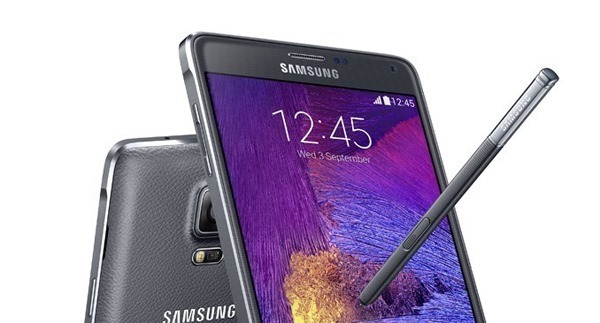
While most smartphone vendors release maybe half a dozen new devices per year, Samsung makes a habit of adding new handsets on an almost monthly basis, and with the Galaxy Note 4's launch still in progress, press renders of the Galaxy A5 suggests that it too is on the cusp of launching. The A5, which will apparently hit the market alongside two other 'A' devices, looks reasonably similar to the Galaxy Alpha that the Korean company introduced back in August, and as per leaked specs, it appears that the new series will target the mid-range market with decent specs and enticing price points.
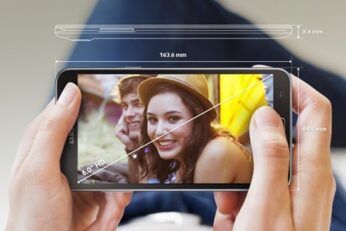
Samsung never seems to take a break from releasing smartphones, and having only rolled out the Galaxy Note 4 and Galaxy Note Edge earlier on this month, has just taken the wraps off the successor to the Galaxy Mega. Like the original handset - it's hard to call it a handset given the sheer size of the thing - the Galaxy Mega packs a sizeable display, pushing the 5.8-inch diameter of the previous version up to the 6-inch mark. As was the case before, though, the specs are nothing to write home about, so if you're seeking mid-range performance over a large canvas, join us below for the finer details.
Samsung doesn't usually need any encouragement to do a spot of advertising, and with an ad budget that probably rivals the best of them it has started go use some of those dollars to poke yet more fun at Apple.