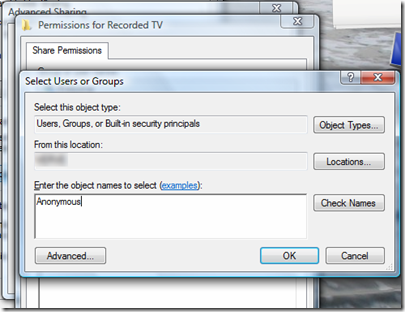
Windows 8 isn’t just missing the Start Orb or the ability to easily restart/shut down the PC; there are certain other elements that Microsoft either decided to bury deep within the settings, or omit altogether, when compared with Windows 7 and earlier iterations of the operating system. Among them is also the ability to easily create ad-hoc wireless networks using your current internet connection and wireless adapter. Essentially, an ad-hoc wireless connection turns your PC into a virtual Wi-Fi router, allowing other devices to connect to the internet through a shared internet connection, each with its own unique IP address. Until Windows 7, ad hoc connections were a breeze, since there was an option to create one right in the Network Management utility. With Windows 8, the ability does exist; it’s just a little hard to achieve. In this article, we’ll guide you how to create a wireless ad hoc connection under Windows 8.
Our computers, notebooks, tablets and smartphones are like mystical libraries of endless possibility, enabling us to carry out almost any task with ease. Despite offering a wealth of information and communication, we often call upon our personal gadgets and machines for the simplest of queries. Whether it be a calculator to perform a basic sum, a clock to tell us what time it is, or a weather update to plan a perfect picnic, we get much of this information from those aforementioned entities.
One of the larger reasons for a lot of people – who are technically sound enough to opt for a free alternative like Linux – to continue using Microsoft Windows, is the platform’s wide support for applications, and, in particular, games. For even casual gamers, Windows is perhaps the sole choice, owing to the fact that the vast majority of games are available on the said platform, and Mac and Linux continue to trail far behind in comparison when it comes to the number of available titles. For this reason, it makes sense that almost all versions of Windows are capable of running most titles, whether they’re legacy classics or modern-era high-end shooters.
Considering that Windows 8 is still relatively new, and that a lot of people are still trying to adapt to the new operating system with its unorthodox design and layout changes, problems are nothing surprising. One of the issues, apart from the subjective criticism that the operating system has been receiving, is certain folders slowing down under Windows 8. More specifically, this complaint has been lodged repeatedly against the Downloads folder, whereby users claim that clicking the Downloads directory from the sidebar, to the actual folder’s contents loading up, can take up to 10 minutes in worst cases. While I haven’t personally encountered the problem, there are some steps that you can take to remedy the situation, not just for Downloads, but for any folder that slows down under Windows 8.
Perhaps no version of Microsoft Windows received as much hatred from both the users and experts alike, as Windows 8. There had been faux pas from the Redmond giant earlier – I , for one, haven’t forgotten Windows ME, or Windows Vista – but the funny thing was, Windows 8 wasn’t either of those. The general negative sentiment towards it usually stems from the fact that Microsoft opted to ‘force’ the users out of their comfort zone for the sake of a better, updated and modernized look. Well, hate it or love it, that’s what we got now.
With the Surface RT struggling to pick up momentum and sales in the tablet market, Microsoft desperately needs to call upon plan B, and in a move that'll no doubt inject a little life into the Surface brand, the software maker has revealed pricing details of the upcoming Surface Pro. Unlike the current slate, it will run on Windows 8 Pro rather than the - for lack of a better phrase - watered-down offering in Windows RT. Legacy apps will be supported on the Intel-powered device, meaning those looking to really get some use out of the Surface won't need to rely on the very, very slim pickings over at the Windows Store.
Having met its long-awaited released date on 26th October, Windows 8 is truly here, and as a testament to just how consumers have responded to the new operating system, the 40 million mark has already been passed in terms of licenses sold.
Mozilla's popular Firefox brings a new release almost every month, and following the October release of Firefox 16 and the subsequent Firefox 17 beta, the latest version has crept out of beta stage and is ready to rock. Available on the official download page, those keen to get the update as soon as possible can grab it right now via 17 Mozilla’s FTP servers - download details at the bottom of the page.
With Windows 8 having just been released to the public, Microsoft now has the test of selling not only to consumers, but to businesses worldwide. Emirates, a renowned high-end airline, has already adopted the platform as a means to improve the inflight experience to its customers, and while staff are better able to communicate thanks to "knowledge-driven" inflight service app by the name of KIS, but those flying with Emirates are also enjoying a slicker experience.
The apps for Windows 8 are still streaming through, and if you're the type of user whom constantly deals with archived content, you'll be pleased to know that WinZip is now available to download.