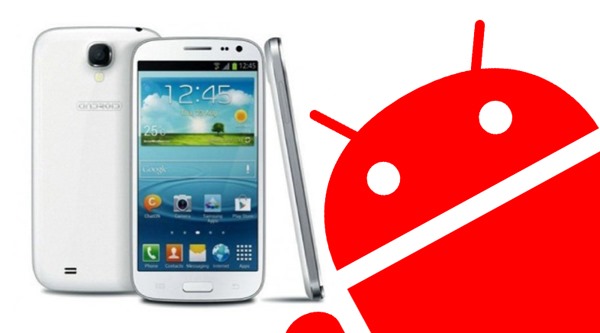
As if the reports of NSA spying over all your mobile phone and Internet activity weren’t enough to make customers all the more paranoid, a recent major security flaw discovered in Android and BlackBerry devices (and some iPhones as well) can basically put millions and millions of customers worldwide at the risk. The vulnerability can basically allow an attacker to assume the highest level of control of an affected cellular device and enable theft of personal data and more. Details past the break.
As our smartphones, watches, tablets and even cars have begun to make ever-increasing use of battery power, those batteries haven't quite managed to keep up. We're charging our smartphones at least once a day, and the new smartwatches on the market don't do much better. Cars need recharging at worryingly short intervals, and at this point it's arguable that we've been held back by the amount of juice we can give things. Something has to change.
In spite of the fact that our smartphones are already capable of processing payments and unlocking doors, we're still quite a way off ditching the traditional card and key from our still-lengthy list of pocket fodder. The Hilton Hotel chain, which already allows those staying to check in using their mobile devices, will soon permit guests to use them for purpose of entering and exiting a room during their stay, promoting the kind of seamlessness that already ought to be a feature at such a high-end chain.
Fancy projectors can run into the zone of thousands of dollars, especially if they're either made for movie watching or some sort of educational role that requires them to function similar to a touch-screen. It's the latter that we're most interested in here, because TouchJet's TouchPico projector may be about to offer something many could find a real use for, at a fraction of the price of existing solutions.
Android 4.4 harbors a neat little feature within its make-up that allows you to speed your device up in just a couple of small steps. It works for the Samsung Galaxy S5, HTC One M8 and the brand new LG G3, as well as the Galaxy Note 3, Nexus 5 and essentially any other handset or tablet running on the latest major release of Google's software. Below, we've got the step-by-step tutorial, so be sure to join us right after the fold for the low-down.
Although many of Google's big announcements over the past year or so have related to Project Glass, this year's I/O developers conference was all about Android, Android Wear, and the Chromecast, with the search giant also rolling out some new products and services for the home and auto markets. Chromecast, which first hit the scene last year, is not only incredibly cheap, but also highly functional, and at the aforementioned I/O in June, we learned that the Big G was about to add Android Mirroring to the HDMI dongle's repertoire. Today, the company has delivered on that promise, and now, Android-wielding Chromecast users can beam the contents of their display onto their HDTVs.
As technology enthusiasts, most of us are fascinated by the booting of operating systems on devices that the software mightn't necessarily be familiar with. There's a massive market for software products that facilitate, say, OS X on a PC and likewise, Windows on a Mac. Console OS, which seeks to bring a genuine Android experience to Intel-based machines, has announced its intention to bring the infrastructure to the Surface Pro line-up, including the Surface Pro 3.
Android's open-source nature is a bit of a double-edged sword in many respects, for although it's customizable to the nth degree, it's also much more susceptible to malicious intrusion when compared with the likes of Apple's iOS. On a regular basis, we hear of new, cunning schemes designed to attack smartphones and tablets running on Google's flagship mobile OS, and today, we've encountered a particularly alarming security hole that could potentially help a hacker relieve you of vast mounds of cash.
With as much technology infiltration as we have in our daily lives today, it becomes quite a challenge to truly protect and maintain your privacy and data security. It’s not just the inherent risk with technology and software bugs, either; we willingly expose our personal identification information to a number of parties in order to use their services. Take the newest discovery, for instance, where it has been found out that an Android phone that has its screen turned off and is connected to Wi-Fi network, can actually be actively browsing the user’s location history to anyone who’s interested in listening.
If you've ever used a Chromebook or indeed, a Chrome tower, you'll know that the software feels just a little bit too light. Sure, it's fast, and if you're heavily invested on Google products on the Web, then it's awesome for your day-to-day needs, but in some instances - i.e. where the use of an app is required - it's always good to have a Mac or PC handy. In a concerted effort try and resolve the issue of Chrome OS feeling like something of a ghost town, Google has announced its intention to get Android apps running natively on its desktop software, and although the process is still in the early stages, this could be a significant step in getting consumers onside with Chrome OS.