FBI Director James Comey recently said that Apple's assistance in San Bernardino iPhone case would represent a simple one-off event, and that it wouldn't represent the opening of floodgates that would see Apple extracting data from any old device. Well, only 24 hours later, it seems that the Department of Justice doesn't exactly share the mindset, and is filing court orders across the United States now in the hope of forcing Apple to extract iPhone data in a dozen further criminal investigations.
A number of high profile names from the business world have already come out in support of Apple as the company fights against a federal court order to assist law enforcement in unlocking an iPhone involved in the San Bernardino shootings in California. Notably, current Google CEO Sundar Pichai offered his support to Apple, calling the move a "troubling precedent" if allowed to continue. Now, a couple of additional figure heads from the technology community have chimed in with an opinion, one in favor of Apple's stance on the case, and one supporting the FBI's position.
It probably won't come as any surprise that Apple is still vehemently opposed to assisting the FBI in decrypting the iPhone that belonged to one of the accused in the California shooting last year. After initially being ordered by a federal judge to assist law enforcement agencies with their enquiries, the Cupertino-based company has since opted against compliance on the grounds that what it is being asked to do could have serious ongoing repercussions for all iPhone owners. Now, in an effort to shed some clarity on the situation, Tim Cook's company has published a FAQ that goes into additional detail as to why compliance is a very bad idea in this instance.
Senior Apple executives have told reporters on a scheduled call that county officials within San Bernardino reset the Apple ID/iCloud password associated with the iPhone 5c that is part of the law enforcement's case. The executives also went as far as to say that if the Apple ID password had not been reset in the crucial hours after the shooting in California, then it was highly possible that the data FBI needed from the device could have been retrieved from iCloud backups after a court order without having to build any backdoor to iPhone which FBI is now demanding Apple to create.
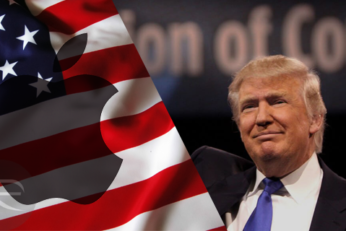
Donald Trump has managed to get himself into the news for yet another odd reason today after he called for a boycott of Apple products. A senior Apple executive has since then responded to Trump's call for Apple boycott Apple. Here are the details.
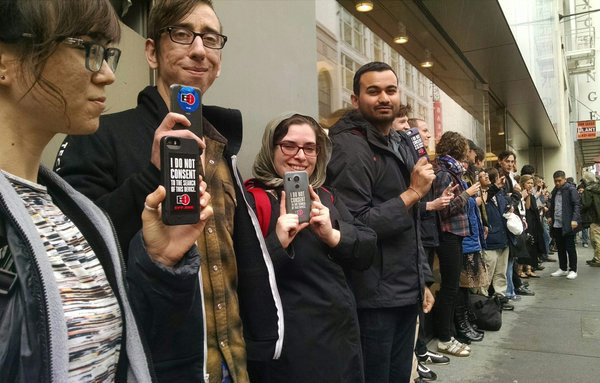
Internet rights advocacy group Fight for the Future has taken to the streets to protest against the FBI's request that Apple provide a tool to allow it to access data on a locked iPhone, with Apple's San Francisco store being the focus of that protest.
Security vulnerability on smartphones is more synonymous with Android than any other platform, and a new string of malware targeting it seems to reinforce that sentiment. Discovered by a Danish security firm, Mazar BOT is the newest malware in town that can gain admin rights on your phone and subsequently take control of it.
A Federal court in the U.S. has ordered Apple to help the FBI crack the iPhone 5c belonging to one of the San Bernardino shooters. Apple has responded with an open letter by CEO Tim Cook. Here are the details.
California has had a bill introduced into legislation that any smartphone built on or after January 1st 2017 and sold in California must be able to be decrypted by the manufacturer of that device, or the company that makes its operating system.
Here's how to get, setup and use a USB Security Key with your Google Account for two-step verification. Security Keys use cryptography instead of standard verification codes which make them more secure for logging in, and they work without needing a data connection or battery, best of all, you can carry them easily wherever you go.