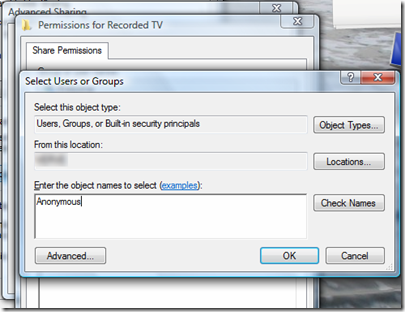
If there was ever a time to upgrade the firmware on your Seagate wireless Network Attached Storage (NAS) drive, then today is the day to do it. Wireless NAS drives have become an efficient, easy and extremely convenient way for individuals to store and access a range of files, both at location and remotely. According to researchers at Tangible Security, that convenience is being compromised by a number of newly discovered vulnerabilities that leaves certain Seagate NAS drives open to attack by malicious individuals.
Additional information pertaining to the iCloud account compromise that we reported about last week has now been made public, including a way of checking if you've been compromised.
Many Mac users like to think that Apple's computers are all but safe from any sort of software virus, and while that's not strictly true, it is a fact that Macs don't suffer from the same security, or at least virus issues that have plagued the Windows PC for many a year. Security through obscurity has kept the Mac largely at the bottom of the virus food chain, but that doesn't mean it's invulnerable.
Security researchers at Zimperium have some bad news for Android users out there who regularly send and receive multimedia messages. According to the researchers, a major security hole exists in the Android platform which could potentially allow malicious individuals to gain access to a device though simply sending a seemingly innocent text message to the targeted number. Android is currently the most popular mobile operating system on the planet, accounting for approximately 80% of smartphones in existence, so it isn't difficult to understand why this is a serious cause for concern.
It's been an interesting 24 hours in the world of security, with the ominously named Hacking Team themselves being hacked, resulting in 400GB of its data being strewn across the Internet. Inside that data people are finding all kinds of things, not least a price list which details the services Hacking Team offered to those willing to pay the cash - including governments.
Here’s why pre-loaded bloatware on OEM Android devices and Windows PCs needs to die right now for good.
A number of dedicated security researchers from the University of Indiana and the Georgia Institute of Technology have presented proof of a number of zero-day flaws within Apple’s iOS and OS X operating systems. The discovery, which in itself sounds startling and will likely cause concern amongst a lot of Apple device owners, also means that it’s theoretically possible for hackers to essentially crack Apple’s Keychain and remove sensitive information such as passwords directly from the Mac, iPhone or iPad running a malicious software.
It's been a bad day for both Samsung and Swift, the makers of the keyboard loved by many Android and iOS users, after it was discovered that a security flaw leaves Galaxy devices open to the running of malicious code when the Swift Keyboard is installed. The flaw, according to the security researcher who discovered it, affects over 600 million devices, and that includes the brand new Galaxy S6 and Galaxy S6 edge.
A new bug has been discovered deep within the native iOS Mail app which lets hackers produce official looking iCloud authentication popup that is then presented to the user to steal their login credentials.
The dangers of using public WiFi networks and how to stay safe and secure online. These are the best measures you can take to keep yourself in the green zone.